
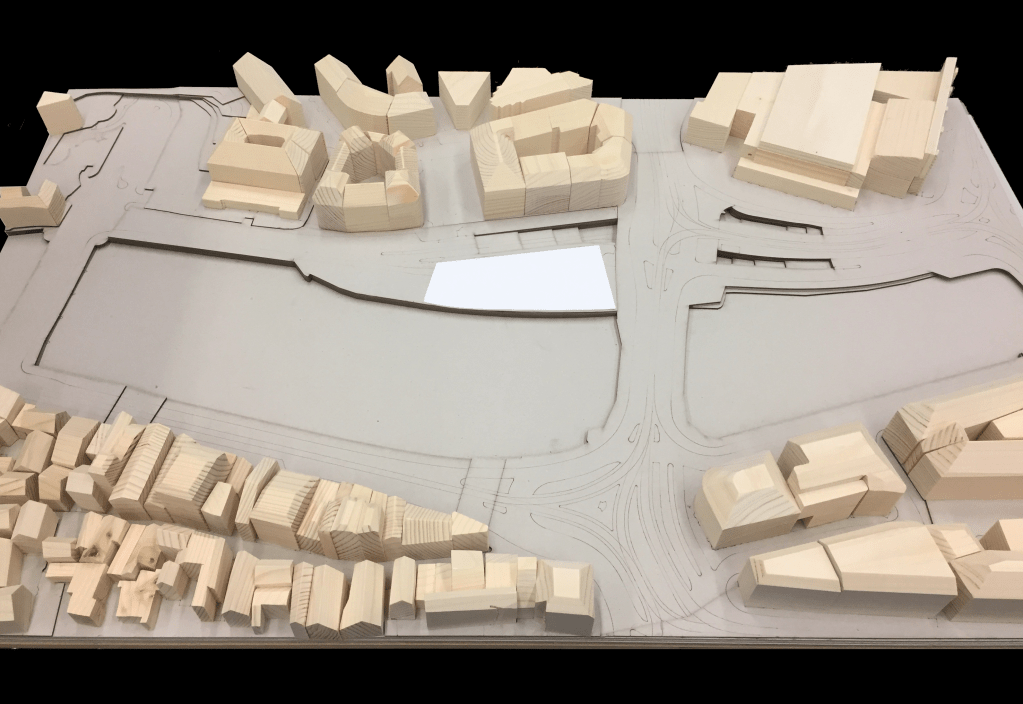
The Papierwerdareal is one of the most interesting sites in Zurich. This area at the very center of the city, is now sandwiched between massive traffic infrastructure and the river, used to be a natural river island. And this geological circumstance had a huge impact for the urban development of this city, as it represented a natural connection point of the two river sides. I actually believe that this island is the reason why this area is now the most central location in the city of Zurich and why the mainstation was eventually built where it is now.
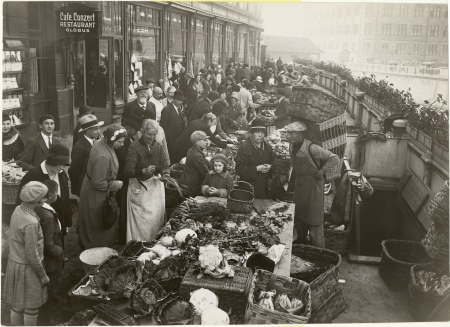
The island went through various stages of use and also spatial transformations. It once belonged to the Fraumuenster Abbey and was later used for more industrial purposes as Papiermuehle, where it has its name from. at the end of 19th century the first Warenhaus for Globus was built on it. With that it became a modern urban public space. The Warenhaus at that time was a place for people to experience a new form of shopping and as a means to escape everyday life. There was a coffee shop attached at the back where people could enjoy the sun next to the river. At some point there was even a Badi attached to the island.
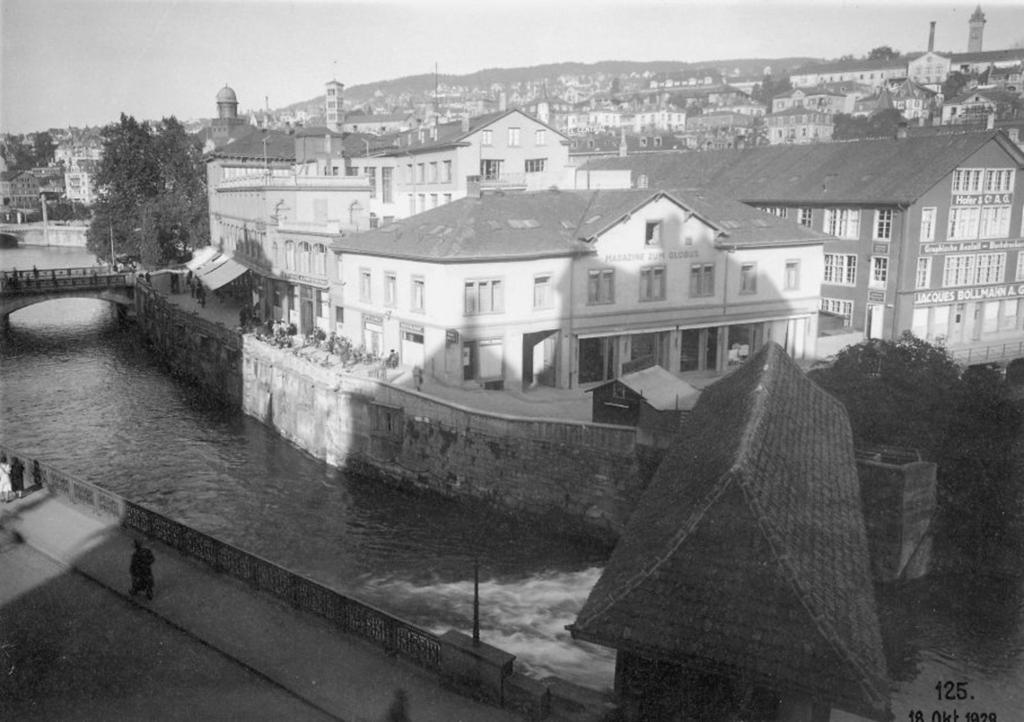
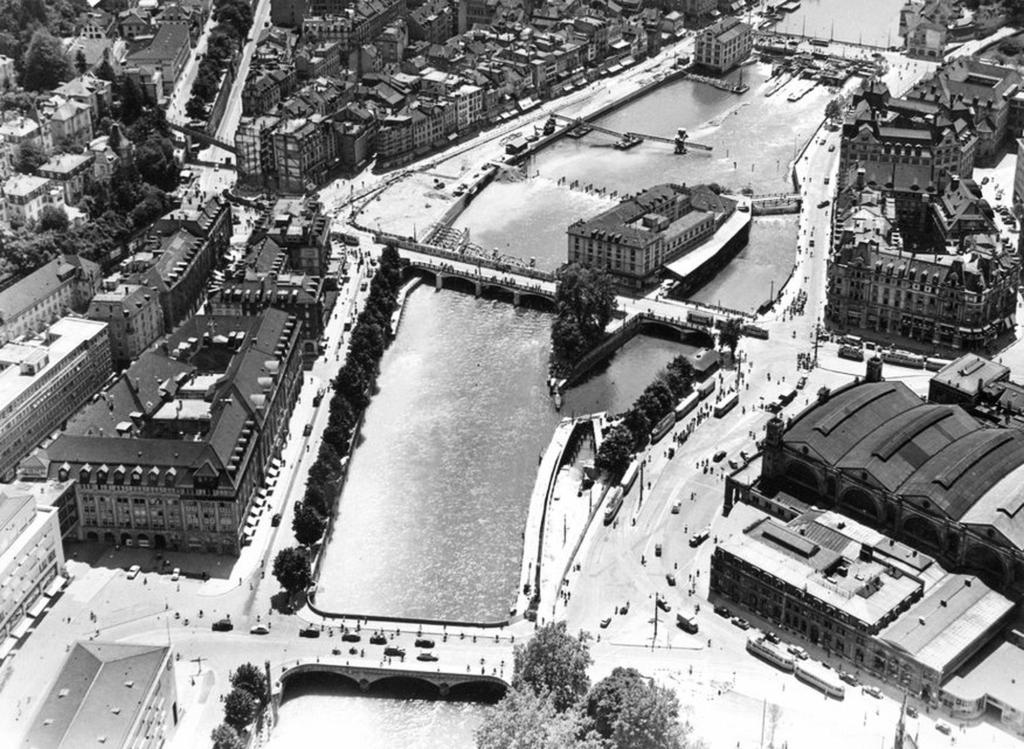
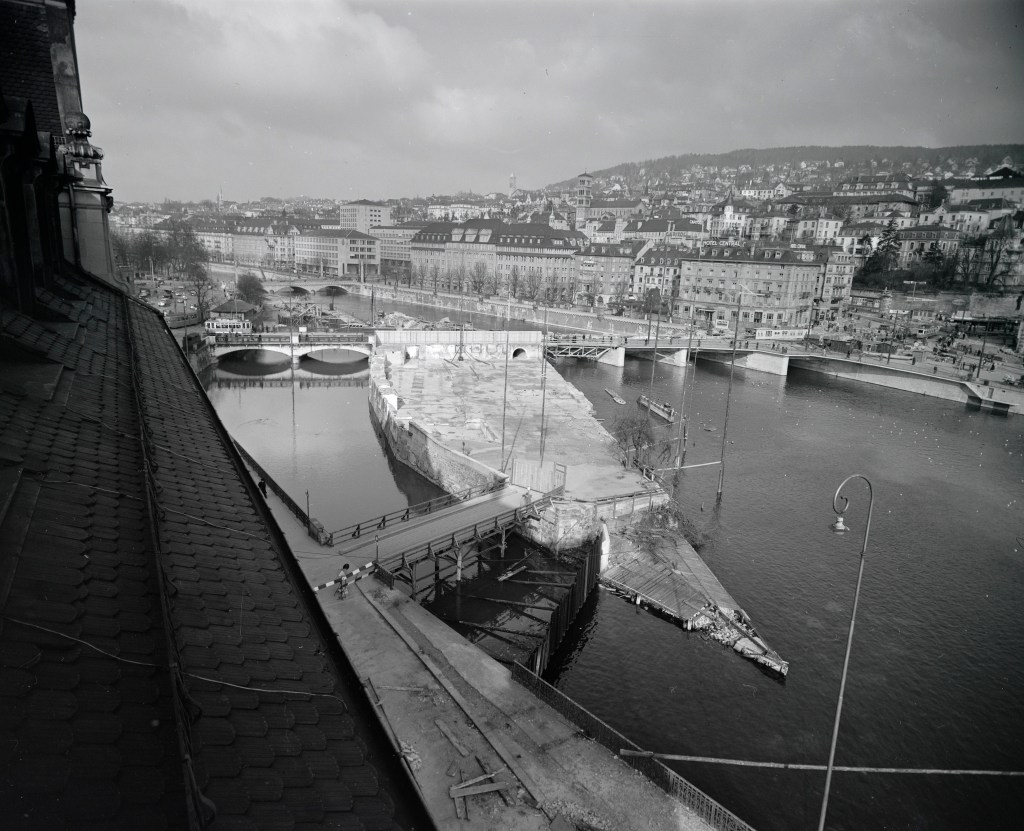


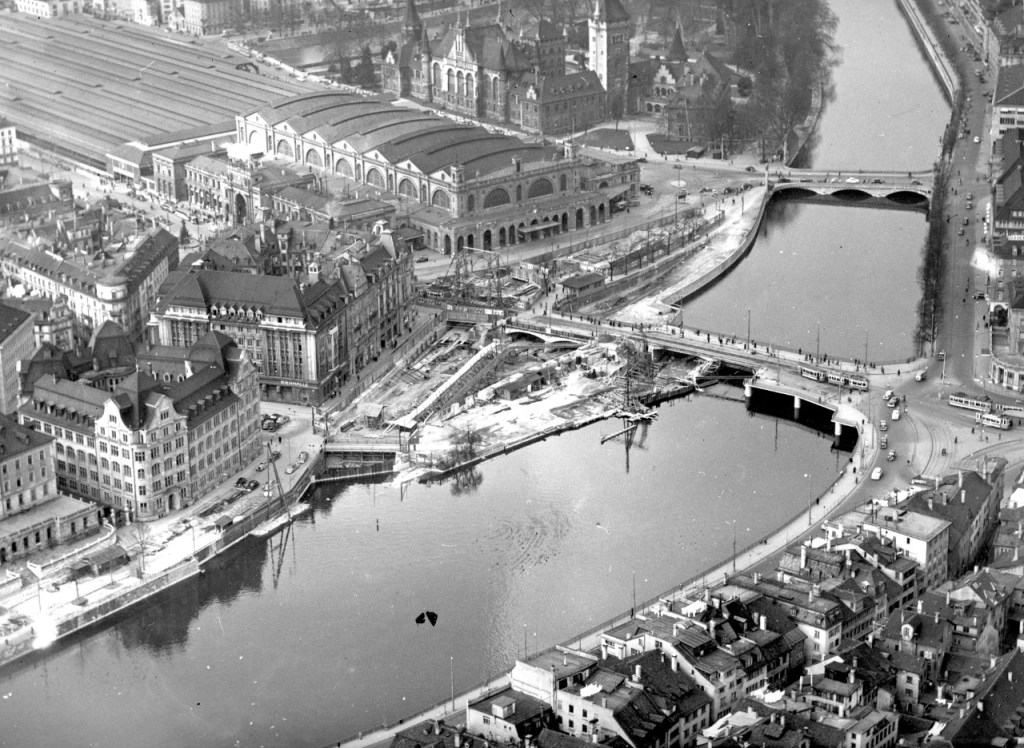

With the rise of the cars and motorization, around 1950 the public voted for the extension of the road network and to close the narrower channel of the river to make space for roads. Globus received a provisorium on the site after the massive restructuring of the area, which remained ever since Globus moved to its current site on the Bahnhofstrasse.
This provisorium was then subject of many events of disputes, competitions, and temporary use. At some point there was also the ETH architecture department in it, youth movements wanted it as cultural center for the public, which resulted in the Globus Krawalle in 1968. Many projects for the reuse of the site were proposed ever since but none of them was ever realized. partially, because the public could not agree on what could possibly be fitting or good enough for this site. A recent survey actually showed that the majority did not want anything to be built on there.
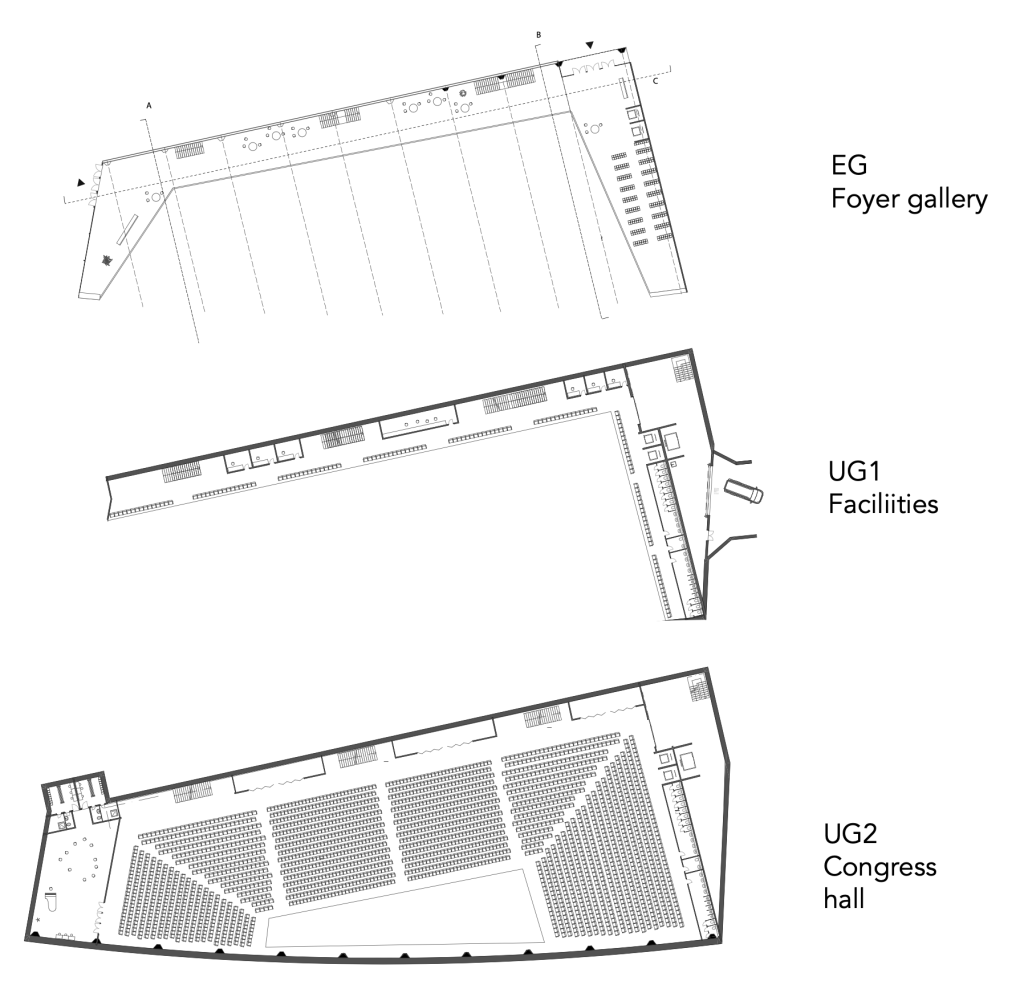
A conventional congress center would not be the right use of this site, and would hardly be accepted by the public. What I therefore propose here is to give this site back entirely to the public, and to only use the basement of the existing building as an extension of the congress center at the Tonhalle Zurich. The congress center at the lake front already has all the facilities needed for a congress center, which is another reason why a conventional congress center was not needed, and especially not on this site. what was however missing, is a large hall fitting 3000 people, which is therefore the program of my basement. this hall is designed to be used both for congress and concerts, just like at the Tonhalle. as both sites lie at the water front, conceptually, these two sites could be connected by a Limmatschiff, which is why there is an outdoor foyer and entrance entrances also at the lower end of the building.


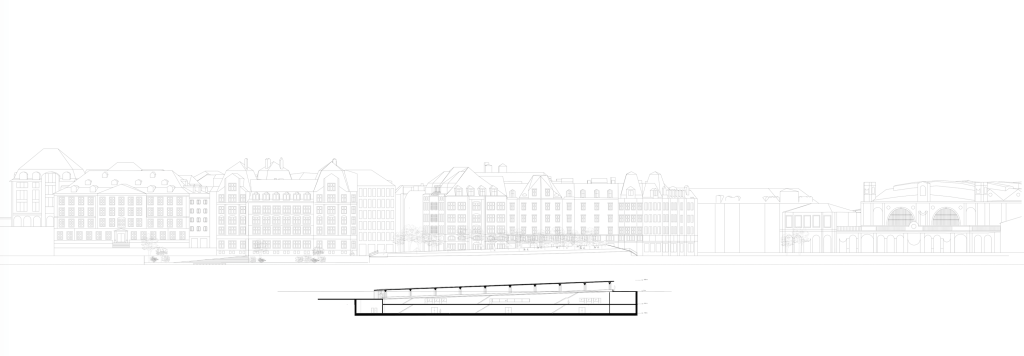
To create a large hall in the basement, the -1 slab and the columns needed to be removed from the existing. As this basement is directly facing the waterfront, I had to find a solution to hold back the water pressure that was formerly pushed against by the -1 slab. decided to construct a roof with a very shallow incline that would have a large horizontal force to exactly create this needed weight against the water, so I could treat to problems with one solution. Given by the unsymmetrical width of the site, the top end being roughly double the width to the front, also needed a higher static height than the lower end. This resulted in a two-directionally inclined surface as a roof, a 3-4% slope in all directions.
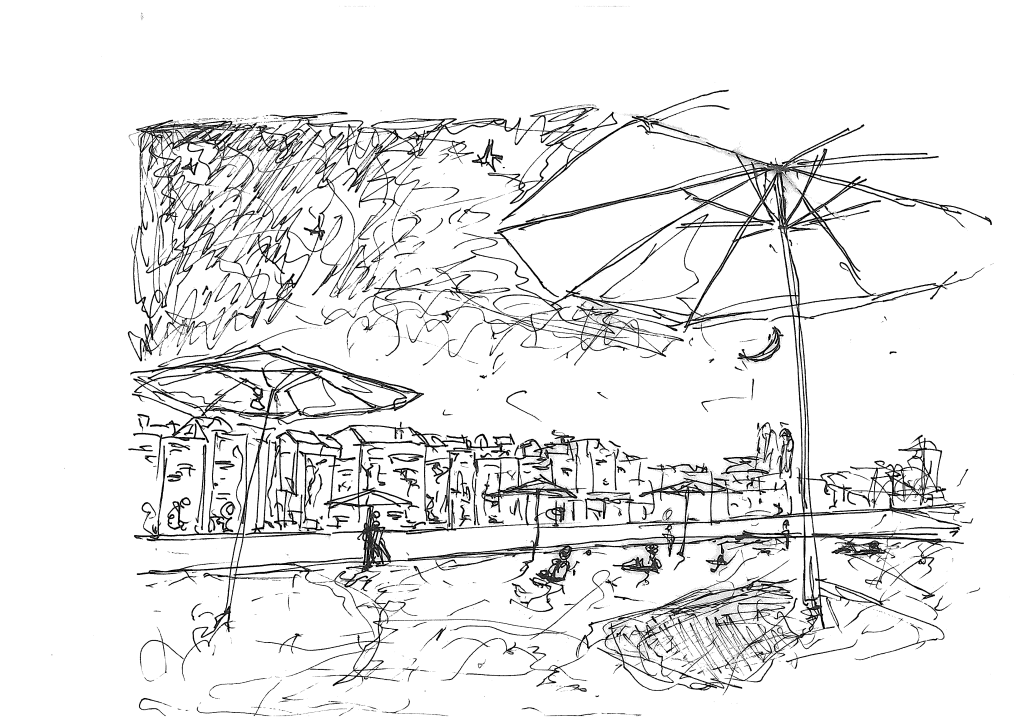
I started to be very intrigued by this sloped large surface, creating this public square of a new kind. only by its incline this public square was clearly oriented to its most attractive side, the waterfront. Being on an angle, not the usual things happening on a public square would be possible, but it does provide a perfect space for people to escape the density of the city around them get distance from everyday hectics. It will never be very populated, as people need to make the effort to step up to this surface, and there is no opportunity for consumption on top. But it is a space perfect for sitting still, think or dream watching the water, or sunbathing, or stargazing, with only umbrellas providing some shade. Space is an increasingly luxurious good in a densifying city, and such a quiet and spatious place in the middle of the city could therefore be an appropriate, and truly contemporary answer for repurposing this historic site of the city and former island.
 Patricia Himeka Wepfer